California Cottage Food Law: What You Can (and Can't) Sell in 2026
Complete guide to California cottage food laws. Learn about Class A vs Class B operations, allowed foods, sales limits, and how to get started legally.
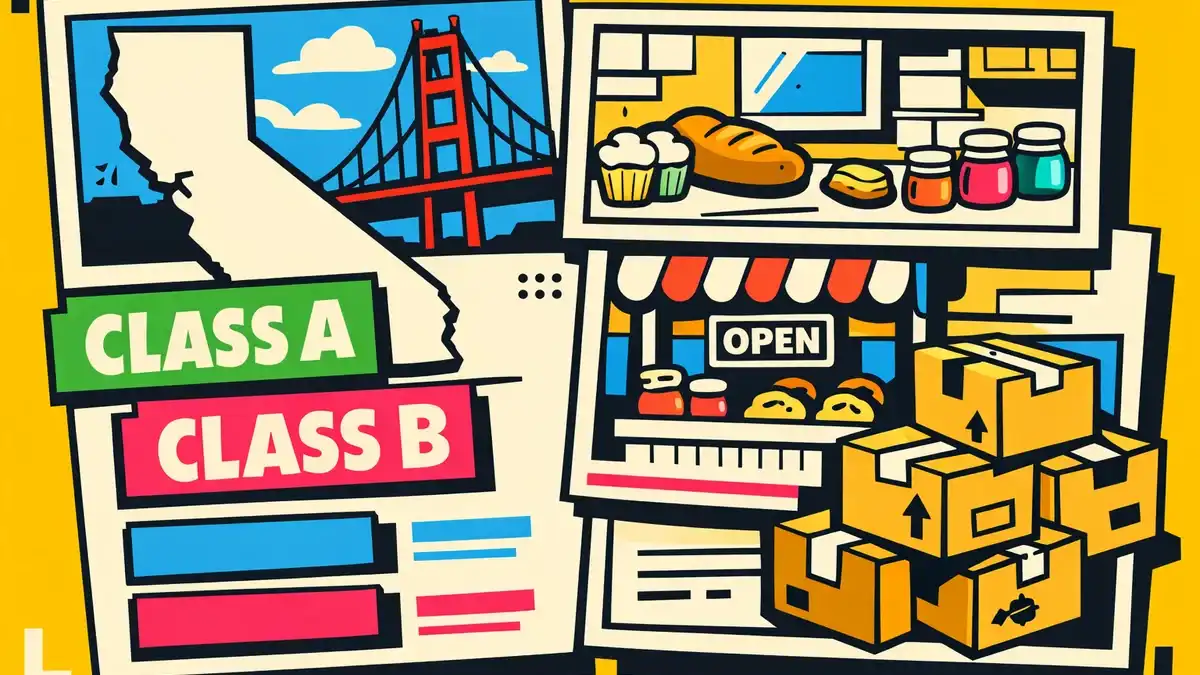
California has long been a pioneer in the “cottage food” movement, empowering thousands of home bakers, jam makers, and snack creators to turn their passion into a legal business. Since the landmark passage of AB 1616 (The California Homemade Food Act) in 2012, the landscape has evolved significantly with new updates in 2021 and 2023 that expanded sales limits and allowed for statewide shipping.
If you are a home cook in the Golden State, navigating the maze of Department of Public Health (CDPH) regulations and county-level permits can feel overwhelming. This guide is designed to be the definitive resource for California cottage food operations (CFOs) in 2026, covering everything from the distinction between Class A and Class B permits to the granular details of labeling and sales limits.
What is the California Homemade Food Act?
The California Homemade Food Act, officially known as Assembly Bill 1616, was signed into law by Governor Jerry Brown and took effect on January 1, 2013. Its primary goal was to foster local economic growth and support small-scale food entrepreneurs by allowing them to produce “non-potentially hazardous” foods in their own home kitchens.
Before this law, selling any food made at home was technically illegal in California. To sell food, you needed a permit for a commercial kitchen, which carried overhead costs that were often prohibitive for hobbyists or startup founders.
Key Regulatory Bodies
While the law is statewide, its enforcement is localized:
- California Department of Public Health (CDPH): Maintains the master “Approved Food List” and sets general labeling and training standards.
- Local Environmental Health Departments (LEHD): Your specific county (e.g., Los Angeles, San Diego, Santa Clara) is responsible for processing your application, conducting inspections (for Class B), and issuing your registration or permit.
Class A vs. Class B: Choosing Your Business Model
California uniquely categorizes cottage food operations into two tiers. Your choice between Class A and Class B depends entirely on how you plan to sell your products.
Class A: Direct Sales Only
Class A is the most common starting point for home-based businesses. It is designed for those who want to sell directly to the end consumer.
- Permit Type: Registration.
- Inspection: No initial home inspection is required (though you must complete a self-certification checklist).
- Sales Channels: You can sell at farmers’ markets, festivals, bake sales, from your home, and online (as long as delivery is within California).
- Complexity: Lower. Usually a simple application and a registration fee.
Class B: Direct and Indirect Sales
Class B is for entrepreneurs who want to scale. If you dream of seeing your granola on a local grocery store shelf or sold in a neighborhood cafe, you need a Class B permit.
- Permit Type: Permit.
- Inspection: Mandatory annual home kitchen inspection by a county health inspector.
- Sales Channels: Includes all Class A channels plus “indirect sales” (wholesale). This means you can sell to restaurants, retail stores, and coffee shops.
- Complexity: Higher. You must meet more stringent sanitary requirements to pass an inspection.
| Feature | Class A | Class B |
|---|---|---|
| Sales Type | Direct to Consumer | Direct + Indirect (Wholesale) |
| Inspection | None (Self-Certify) | Annual Home Inspection |
| County Fee | Lower ($100 - $200) | Higher ($250 - $500+) |
| Wholesale? | No | Yes |
Sales Limits for 2026
One of the most significant updates in recent years came via AB 1144, which substantially raised the gross annual sales limits for cottage food operations. These limits are now adjusted annually for inflation based on the California Consumer Price Index (CPI).
As of 2026, the estimated sales limits are:
- Class A Operations: Approximately $88,000 - $90,000 (Adjusted from the 2021 base of $75,000).
- Class B Operations: Approximately $175,000 - $180,000 (Adjusted from the 2021 base of $150,000).
Note: Always check with your local county health department for the exact inflation-adjusted figure for the current fiscal year.
If your sales exceed these limits, you are no longer considered a “cottage food operation” and must transition to a commercial kitchen or a Microenterprise Home Kitchen Operation (MEHKO), which has different rules and a lower sales cap (usually around $100k) but allows for hot meals.
The Approved Food List: What Can You Sell?
California is strict about the types of food allowed. You may only produce foods that are non-potentially hazardous, meaning they do not require refrigeration to keep them safe from bacterial growth.
1. Baked Goods (Without Cream, Custard, or Meat)
- Allowed: Bread, biscuits, churros, cookies, muffins, scones, sweet bread, tortillas, and waffles.
- Note: Fruit pies are allowed, but “cream pies” (like pumpkin or custard) are generally prohibited because they are shelf-stable risk factors.
2. Candies and Confections
- Allowed: Brittle, caramel, cotton candy, fudge, marshmallows, nut galls, and chocolate-covered non-perishables (like pretzels or nuts).
- Prohibited: Fresh fruit dipped in chocolate (due to moisture levels).
3. Dried Products
- Allowed: Dried fruit, dried vegetables, nut mixes, popcorn, spice blends, and herb blends.
- Note: You can package and sell tea blends and coffee beans.
4. Preserves, Jams, and Jellies
- Allowed: Most standard fruit jams and jellies.
- Prohibited: “Low-sugar” or “no-sugar” jams are often scrutinized because sugar acts as a preservative. Vegetable jams (like pepper jelly) are only allowed if they meet specific pH requirements.
5. Other Items
- Allowed: Honey, sorghum syrup, fruit butters (apple/pear), and flavored vinegars.
The “Big No-No” List (Prohibited Foods)
- Meat and Poultry: No jerky, no meat pies, no tamales with meat.
- Pickled/Acidified Foods: Most pickles, salsas, and fermented foods (like kombucha or kimchi) are prohibited under CFO laws. These require a Processed Food Registration (PFR) and a commercial kitchen.
- Dairy-Heavy Items: No cheesecake, no buttercreams made with fresh milk/cream (unless they are shelf-stable versions), and no ice cream.
Labeling Requirements: The 2026 Checklist
Labeling is the area where most CFOs fail their first inspection or registration. California law is very specific about what must be on your package. Every product must have a label that includes:
- The Common Name: e.g., “Chocolate Chip Cookies.”
- CFO Identification: The words “Made in a Home Kitchen” must be prominently displayed in at least 12-point type.
- Operation Name: The name of your CFO.
- Registration/Permit Number: Your Class A Registration or Class B Permit number.
- County Name: The name of the county that issued your permit.
- Ingredients: Listed in descending order of weight.
- Allergens: You must clearly state if the product contains any of the “Big 9” allergens (Milk, Eggs, Fish, Crustacean shellfish, Tree nuts, Peanuts, Wheat, Soybeans, Sesame).
- Net Quantity: The weight or count of the product (in both US and Metric units, e.g., 16 oz (454g)).
Example Label Layout:
Artisan Sourdough Bread
MADE IN A HOME KITCHEN
Ingredients: Bread Flour (Wheat), Water, Salt.
Contains: Wheat.
Net Wt: 24 oz (680g)
Business Name: Sunnyvale Bakery
Permit #: 12345, County of Santa Clara
Where and How Can You Sell?
Thanks to AB 1144, California CFOs have more freedom than ever to reach customers.
1. In-Person (Direct)
You can sell from your home, at certified farmers’ markets, community events, and temporary bake sales. You can also sell via “Community Supported Agriculture” (CSA) subscriptions.
2. Online and Shipping
You can take orders online and via social media. Most importantly, you can ship products via USPS, UPS, or FedEx, provided the shipping destination is within the state of California. Crossing state lines is prohibited by federal law (FDA) because cottage food is not federally regulated.
3. Retail and Wholesale (Class B Only)
If you have a Class B permit, you can sell your products to:
- Local grocery stores.
- Coffee shops.
- Restaurants (to be used in their meals).
- Gift shops.
Step-by-Step Compliance Checklist
Ready to launch? Follow these steps to ensure you are fully compliant:
- Check the Approved List: Ensure your product is on the CDPH Approved Food List.
- Pick Your Class: Decide if you want Class A (Direct) or Class B (Indirect).
- Choose a Business Name: Check for availability and register a DBA (Doing Business As) with your county if necessary.
- Complete Food Safety Training: All CFO operators must complete an ANSI-accredited Food Handler course within 3 months of getting their permit. This must be renewed every 3 years.
- Draft Your Labels: Create a mock-up of your labels to submit with your application.
- Review Zoning Laws: Most residential areas allow CFOs, but check with your local planning department for any “home occupation” restrictions.
- Apply via Your County: Visit your local Environmental Health Department’s website, download the CFO application, pay the fee, and submit your labels.
- Prepare for Inspection (Class B Only): If you are Class B, clean your kitchen, organize your ingredients, and ensure no pets or children will be in the kitchen during production.
- Get Insurance: While not required by law, “Product Liability Insurance” is highly recommended to protect your personal assets.
Frequently Asked Questions (FAQ)
1. Can I sell my cottage food to someone in Nevada or Oregon? No. California cottage food law and federal FDA regulations prohibit the interstate sale of cottage foods. You may only sell and ship to customers located within the borders of California.
2. Do I need a business license in addition to my CFO permit? Usually, yes. While the CFO permit handles health and safety, most cities or counties require a general business license or a Home Occupation Permit to operate any business from a residence.
3. Can I have employees in my home kitchen? California allows you to have one full-time equivalent (FTE) employee who is not a family or household member. Family members and household members can help without being counted toward this limit.
4. Can my pet be in the kitchen while I bake? No. During the preparation, packaging, or handling of cottage food, no infants, small children, or pets are allowed in the kitchen. This is a primary focus during Class B inspections.
5. How much does it cost to get started? Registration fees vary by county but typically range from $100 to $500. Add the cost of ingredients, packaging, labels, and food safety training ($10-$20), and you can often start for under $750.
Official Sources & Resources
To remain compliant, always refer to the latest documents from the state:
- CDPH Cottage Food Operations Home: cdph.ca.gov/Programs/CEH/DFDCS/Pages/FDBPrograms/FoodSafetyProgram/CottageFoodOperations.aspx
- Official Approved Food List (PDF): CDPH Approved Cottage Foods
- California Health and Safety Code Section 113758: The statutory language governing CFOs.
- Local County Health Departments: Search “[Your County] Environmental Health Cottage Food” for local applications.
Disclaimer: This guide is for informational purposes only and does not constitute legal advice. Requirements can vary by county and are subject to change. Always verify with your local environmental health department before beginning operations.
Ready to simplify your cottage food business? Sign up for Butterbase free—no credit card required. Get instant access to recipe costing, inventory management, and order tracking so you can focus on what you do best: creating delicious food.