Utah Cottage Food Law: Complete Guide for Home Bakers in the Beehive State
Everything Utah home bakers need to know about cottage food laws. Learn what you can sell, sales limits, labeling requirements, and how to start legally.
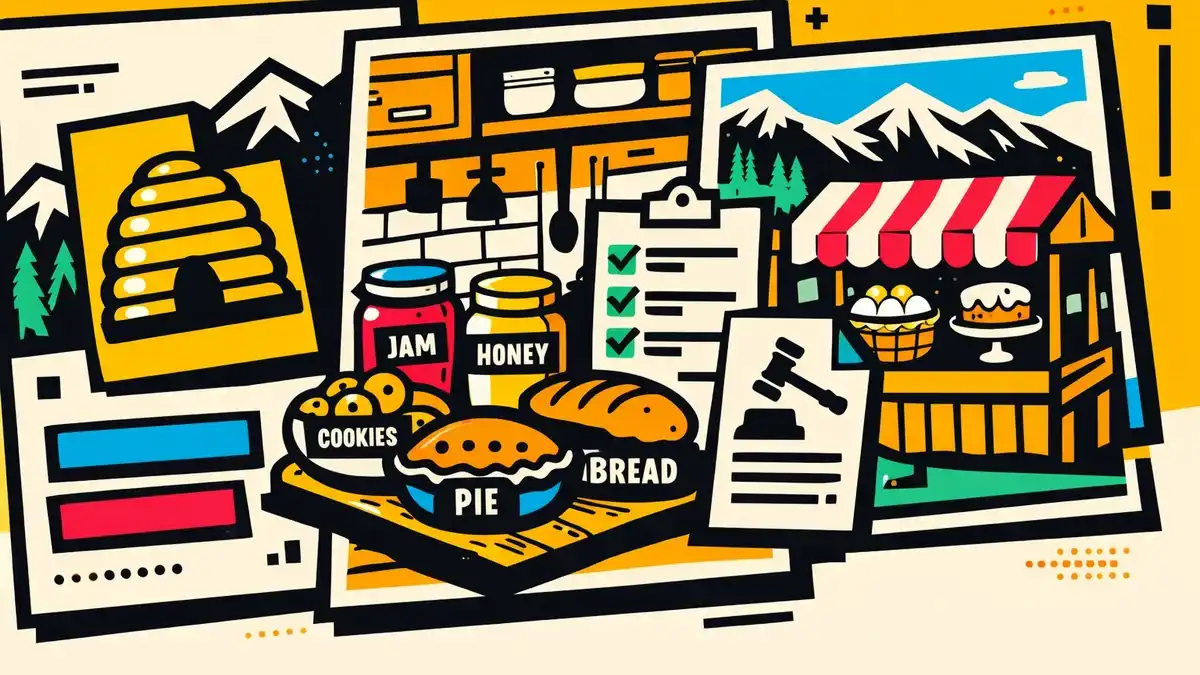
Utah Cottage Food Law: The Ultimate Guide for Home-Based Food Entrepreneurs
Welcome to the Beehive State, a place where the spirit of industry is literally woven into our flag. Here at Butterbase, we call Utah home. From the stunning peaks of the Wasatch Front to the red rocks of Moab, we know that Utahns are some of the most industrious and creative entrepreneurs in the country.
If you’ve ever pulled a perfect tray of sourdough out of your oven in Salt Lake City or whipped up a batch of world-class peach preserves in Brigham City, you’ve probably wondered: Can I sell this legally?
The answer is a resounding yes, but with a uniquely Utah twist. Unlike many other states that have a single “cottage food” statute, Utah offers three distinct pathways for home-based food businesses. Whether you want to sell your cookies in local Harmon’s grocery stores or serve hot meals to your neighbors, Utah has a framework for you.
In this comprehensive guide, we’ll break down everything you need to know about the Utah Cottage Food Law, the Home Consumption and Homemade Food Act, and the Microenterprise Home Kitchen Act. We’ll also share some local “insider” tips on how to navigate the Utah market, find the best farmers markets, and leverage Butterbase’s local expertise to grow your brand.
1. The Utah Food Business Landscape: Three Paths to Success
Utah is widely considered one of the most “food-friendly” states in the nation. This is largely due to the variety of options available to home producers. Depending on what you make and where you want to sell it, you will choose one of three regulatory paths.
Path A: The Cottage Food Production Program (Rule R70-560)
This is the “traditional” cottage food path. It is regulated by the Utah Department of Agriculture and Food (UDAF).
- Best for: Producers who want to sell in retail stores (like local boutiques or grocery stores) or distribute their products through third parties.
- Requirements: Registration, inspection, and a food handler’s permit.
- Revenue Cap: Unlimited.
Path B: The Home Consumption and Homemade Food Act (Utah Code 4-5a)
Often called the “Food Freedom Act,” this law was passed in 2018 (HB 181) to deregulate direct-to-consumer sales.
- Best for: Farmers market vendors and home-based bakers selling directly to their neighbors without needing government oversight.
- Requirements: No registration or inspection for most items, but sales are limited to direct-to-consumer only.
- Revenue Cap: Unlimited.
Path C: The Microenterprise Home Kitchen Act (Utah Code 26B-7-416)
Passed in 2021, this act allows you to essentially run a mini-restaurant out of your home.
- Best for: Chefs wanting to sell hot, ready-to-eat meals, including those containing meat.
- Requirements: A permit from your local health department and specific volume limits.
- Revenue Cap: Unlimited (but limited by meal volume per day).
2. Deep Dive: Cottage Food Production (The “Retail” Path)
If you see a bag of locally made granola on a shelf at a Utah grocery store like Harmon’s or Sprouts, it was likely produced under the Cottage Food Production Program. This program allows you to produce “non-potentially hazardous” foods in your home kitchen and sell them through retail channels.
Detailed List of Allowed Foods
Utah’s UDAF maintains a strict definition of shelf-stable foods. If your food requires refrigeration to remain safe (like a cheesecake or a cream-filled donut), it is generally prohibited under this specific path.
- Baked Goods: Bread, cookies, fruit pies (apple, peach, etc.), cakes (without cream cheese or custard frosting), muffins, and brownies.
- Candy: Hard candy, fudge, peanut brittle, and the Utah favorite—freeze-dried candy.
- Dry Mixes: Seasoning mixes, dry soup mixes, and hot cocoa mixes.
- Preserves: Jams, jellies, and fruit butters made from high-acid fruits.
- Honey and Syrups: Pure honey and maple syrup. Note that if you are a beekeeper, your hives must also be registered with the Plant Industry Division of UDAF.
- Sourdough: This is a big one in Utah. You can sell sourdough under the Cottage Food Program, but UDAF requires you to submit a pH test of your “starter” from an accredited laboratory to prove it is acidic enough to prevent pathogen growth.
The Registration Process: Step-by-Step
- Food Handler’s Permit: Every person involved in the production must have a valid Utah food handler’s permit. You can get this online through various state-approved providers for about $20.
- Business License: Before UDAF will approve your kitchen, you need a business license from your city or county.
- Submit the Application: You’ll need to fill out UDAF Form PRA CTG. This form asks for your business details, your water source (city water vs. private well), and a list of all products you intend to sell.
- Recipe and Label Review: You must submit your recipes and a sample label for every product. UDAF will review these to ensure they meet federal and state labeling standards.
- The Home Inspection: A UDAF inspector will visit your home. They aren’t looking for a “commercial” kitchen, but they are looking for cleanliness. The “No Pets” Rule: In Utah, you cannot have pets in the kitchen or food storage areas at any time during processing. If you have a dog or cat, you must be able to demonstrate how you keep them out of the workspace.
3. Deep Dive: The Home Consumption and Homemade Food Act (Food Freedom)
In 2018, Utah passed one of the most progressive “Food Freedom” laws in the country. This act was designed to help small-scale entrepreneurs get their start without the overhead of registration and inspection.
Why Choose Path B?
If you are testing the waters or selling exclusively at the Downtown SLC Farmers Market or Wheeler Farm, this path is often the easiest. It allows for a much wider variety of foods, including some that might be restricted under the traditional Cottage Food path (though still no meat or raw dairy).
Selling Directly to the Consumer
The key restriction of the Home Consumption Act is the Direct-to-Sale requirement. This means:
- You must be the one selling the food, or it must be sold at a location where you are present (like a booth).
- The food can be sold at your home, a farmers market, or delivered directly to the customer.
- Online Sales: You can sell online for local pickup or delivery, but you cannot ship your products via USPS/UPS to other states.
Mandatory Disclosure
Because these foods are not inspected, Utah law requires you to be transparent with your customers. Your label must state:
“Not for Resale - Processed and prepared without the benefit of state or local inspection”
4. Labeling Requirements: The Fine Print
Utah’s labeling laws are a blend of federal FDA requirements and specific state-mandated disclosures. At Butterbase, we see many bakers struggle with this, so let’s break down exactly what needs to be on your package.
Principal Display Panel (The Front)
The front of your package must contain three things:
- Statement of Identity: The common name (e.g., “Lavender Sea Salt Brownies”).
- Net Quantity: The weight (in oz and g) or volume (in fl oz and ml).
- The Utah Statement: For Cottage Food (Path A), you must have “Home Produced” in bold, 12-point type. For Food Freedom (Path B), you must use the “Not for Resale” disclosure mentioned above.
Information Panel (The Back or Side)
- Ingredient Statement: List every ingredient in descending order by weight. Don’t forget to break down sub-ingredients (e.g., “Butter (Cream, Salt)”).
- Allergen Declaration: You must list any of the Big 9 allergens. In Utah, this is strictly enforced.
- Producer Information: Your full business name, street address, and phone number. Note: Some cities allow you to use a business address if you have a physical shop, but for home bakers, this is usually your residential address.
5. Microenterprise Home Kitchens: The “Home Chef” Option
If your passion is more “tacos and tamales” than “cookies and cakes,” Utah’s Microenterprise Home Kitchen Act (MEHKO) is your path. This law allows you to run a professional-grade kitchen from your home and sell hot, ready-to-eat meals.
MEHKO Requirements:
- Health Department Permit: Unlike the other paths, this is handled by your local county health department (Salt Lake, Utah, Davis, etc.).
- Inspection: Your kitchen will be inspected to ensure you have proper handwashing stations and temperature control for meats.
- Meal Limits: To keep these businesses small and “micro,” the law limits you to 30 meals per day or 150 meals per week.
- Resale Prohibited: You cannot sell your meals to a food truck or a cafe; you must sell directly to the person who will eat it.
6. The “Butterbase” Local Guide to Utah Farmers Markets
Since we’re based in Utah, we know the local market scene better than anyone. If you’re looking for where to sell your cottage food products, here are our top recommendations:
The Big Players
- Downtown SLC Farmers Market (Pioneer Park): This is the gold standard. It’s huge, diverse, and attracts thousands of customers. Competition for a spot is fierce, so apply early!
- Park City Silly Sunday Market: Located on Historic Main Street, this market has a high-end vibe and customers who are willing to pay a premium for artisanal, home-produced goods.
- Utah County (Provo/Orem): The Provo Farmers Market at Pioneer Park (Provo) is a great community-focused market with a loyal local following.
The Hidden Gems
- Wheeler Farm Sunday Market (Murray): This is a favorite for families. The atmosphere is relaxed, and it’s a great place to sell kid-friendly treats like cookies or popcorn.
- Logan Farmers Market: If you’re in Cache Valley, this market is the heart of the local food community. It’s a great place to sell preserves made from local Bear Lake raspberries.
- St. George Downtown Farmers Market: Open year-round (thanks to that Southern Utah sun!), this is a great option for producers in Washington County.
7. Utah Sales Tax: What You Need to Know
Utah has a unique tax structure for food. If you are selling “grocery” items (like a loaf of bread or a jar of jam), the state sales tax rate is significantly lower (currently 1.75% plus local options). However, if you are selling “prepared” or “ready-to-eat” foods (like a hot meal from a MEHKO), the full sales tax rate applies.
8. Legislative Context: Why Utah is a Leader in Food Freedom
Utah’s journey toward food freedom didn’t happen overnight. It was driven by a strong local desire for self-reliance and entrepreneurship.
- 2007: The original Cottage Food Act was passed, allowing for home-produced baked goods.
- 2018 (HB 181): The Home Consumption and Homemade Food Act expanded these rights, removing the requirement for UDAF registration for direct sales.
- 2021 (HB 94): The Microenterprise Home Kitchen Act was passed, making Utah one of the first states to allow home-cooked meals containing meat to be sold legally.
This progression shows that the Utah legislature is committed to supporting small food businesses. For you, the entrepreneur, it means there has never been a better time to start.
9. Comprehensive Utah Compliance Checklist
Ready to launch? Follow these steps to ensure you’re 100% legal:
Phase 1: Planning
- Determine your path: Path A (Retail/Cottage), Path B (Food Freedom), or Path C (MEHKO).
- Research your market: Will you sell at a specific farmers market? Do they have extra requirements (like insurance)?
- Recipe Development: Standardize your recipes. Use Butterbase to calculate your exact cost per unit.
Phase 2: Legal Setup
- Utah Food Handler’s Permit: Complete the course and keep your certificate on file.
- IRS EIN: While you can use your SSN for a sole proprietorship, getting a Federal Employer Identification Number (EIN) is free and helps keep your personal and business finances separate.
- Utah Business License: Check with your city’s business licensing department. Some Utah cities have special “home occupation” licenses for cottage food.
- Sales Tax License: Register with the Utah State Tax Commission.
Phase 3: Operations
- Product Labeling: Design labels that meet the 12pt bold “Home Produced” requirement.
- Pet Management: If applying for Path A, ensure you have a way to keep pets out of the kitchen.
- Insurance: Consider getting a policy from a provider like FLIP (Food Liability Insurance Program). Many Utah farmers markets require at least $1M in liability coverage.
10. FAQ: Common Questions from Utah Bakers
Can I sell my homemade bread to a local restaurant?
Under the Cottage Food Program, you can sell to retail stores. However, selling to a restaurant as an ingredient is generally prohibited. Restaurants must source from “approved sources,” and local health departments often require commercial kitchens for these supplies.
Is there a limit on how much I can make?
No! Utah is one of the few states with no revenue cap for cottage food producers or those operating under the Home Consumption Act. Your growth potential is unlimited in the Beehive State.
Can I use a shared commercial kitchen instead?
Yes. If you outgrow your home kitchen, Utah has several shared-use kitchens (like Square Kitchen in SLC). At that point, you would transition from a Cottage Food license to a standard Food Establishment license regulated by the health department.
Do I need to charge sales tax?
Yes. In Utah, almost all food sales are taxable. You must collect the tax from the customer and remit it to the state. You’ll need to track your sales and keep records for tax reporting purposes.
Can I sell freeze-dried candy?
Yes! Utah has become a national hub for freeze-dried treats. Under the Cottage Food Program, freeze-dried candy is considered a “non-potentially hazardous” food and is extremely popular at local farmers markets across the state.
Why Butterbase is Your Best Partner in the Beehive State
At Butterbase, we aren’t just a software company; we are your neighbors. Based right here in Utah, we’ve seen firsthand the incredible growth of the local food scene. From the bustling farmers markets at Pioneer Park to the hidden gem bakeries in Logan and St. George, Utah’s food entrepreneurs are the heart of our community.
We built Butterbase to solve the exact problems Utah home bakers face: recipe costing and inventory management. Our platform is designed to handle the complexities of the Utah Cottage Food Law so you can focus on what you do best—creating delicious food.
How we help Utah bakers:
- Automatic Labeling: Generate labels that meet Utah’s specific “Home Produced” or “Not for Resale” wording requirements.
- Recipe Costing: With inflation hitting local ingredient prices (looking at you, Utah-grown flour and honey), we help you ensure your margins are healthy. Whether you’re selling “Beehive-inspired” honey cakes or traditional Dutch oven breads, we’re here to help you scale your business from a hobby to a thriving enterprise.
Ready to take the next step?
Sign up for Butterbase free and get instant access to recipe costing, inventory management, and tools built specifically for Utah cottage food businesses. See exactly how much you should be charging for your signature treats and keep your business running smoothly—no credit card required.
Official Utah Sources for Further Reading:
- Utah Department of Agriculture and Food (UDAF) - Cottage Food
- Utah Code 4-5-501 (Cottage Food Statute)
- Utah Home Consumption and Homemade Food Act (Full Text)
- Utah Microenterprise Home Kitchen Act (MEHKO)
Disclaimer: While we strive to provide the most accurate and up-to-date information, we are not lawyers. Always consult the Utah Department of Agriculture and Food (UDAF) or the Utah Code directly for the most current legal requirements. Regulations can change, and it is your responsibility as a business owner to remain compliant.